
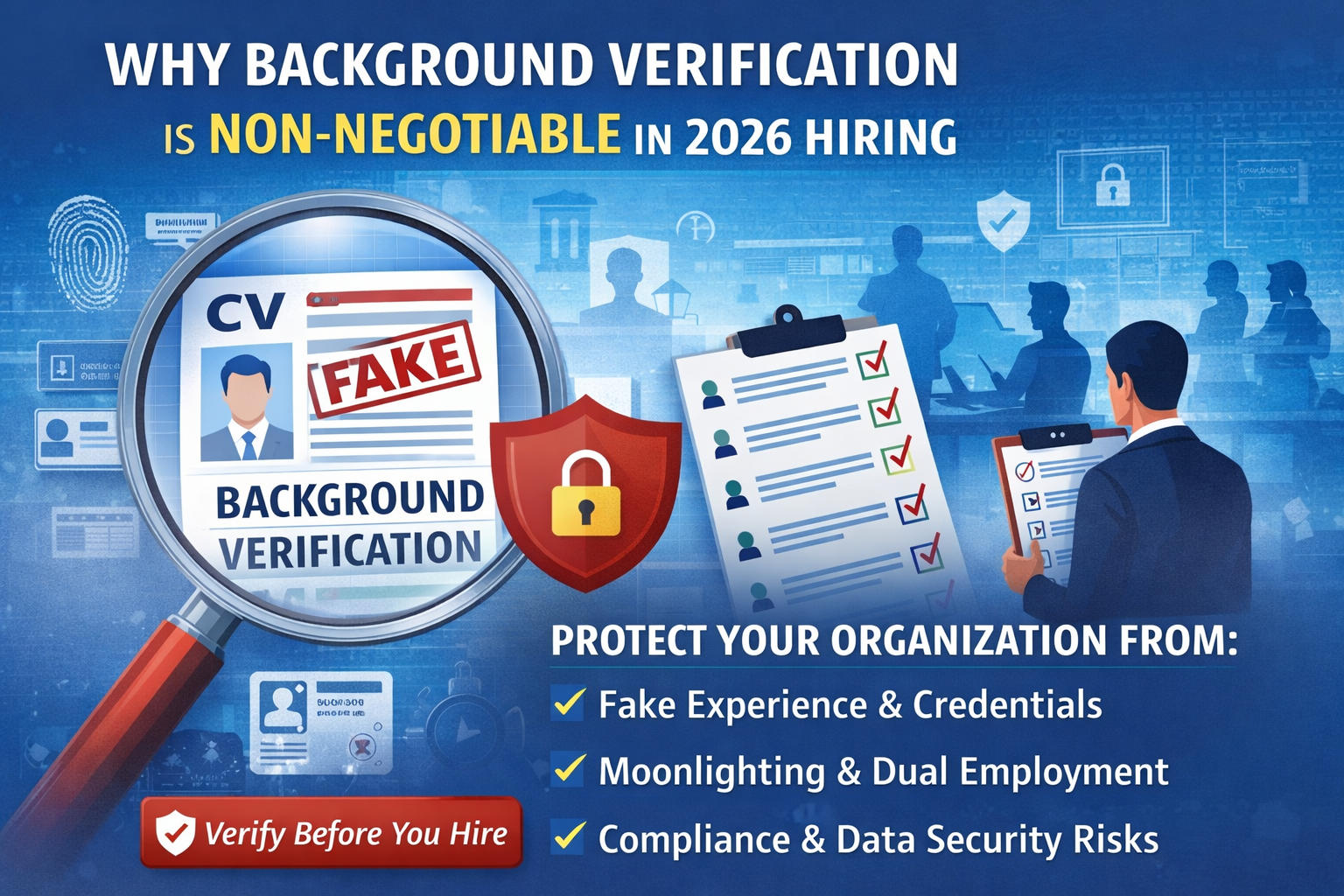
In an increasingly competitive and fast-moving hiring landscape, organizations are under constant pressure to recruit quickly. While speed is important, hiring accuracy has become far more critical. As businesses scale, expand into remote work, and handle sensitive data, the cost of hiring the wrong candidate has never been higher.
As we move into 2026, background verification services are no longer an optional HR process. They are a core component of risk management, compliance, and long-term organizational stability.
The New Reality of Hiring in India
Hiring models have evolved rapidly. Remote work, contract staffing, global talent pools, and startup-driven growth have introduced flexibility—but also increased hiring risks.
Today, employers frequently encounter:
- Fake or exaggerated work experience
- Forged offer letters and relieving letters
- Misrepresented educational qualifications
- Undisclosed criminal records
- Moonlighting and dual employment issues
- Identity and address inconsistencies
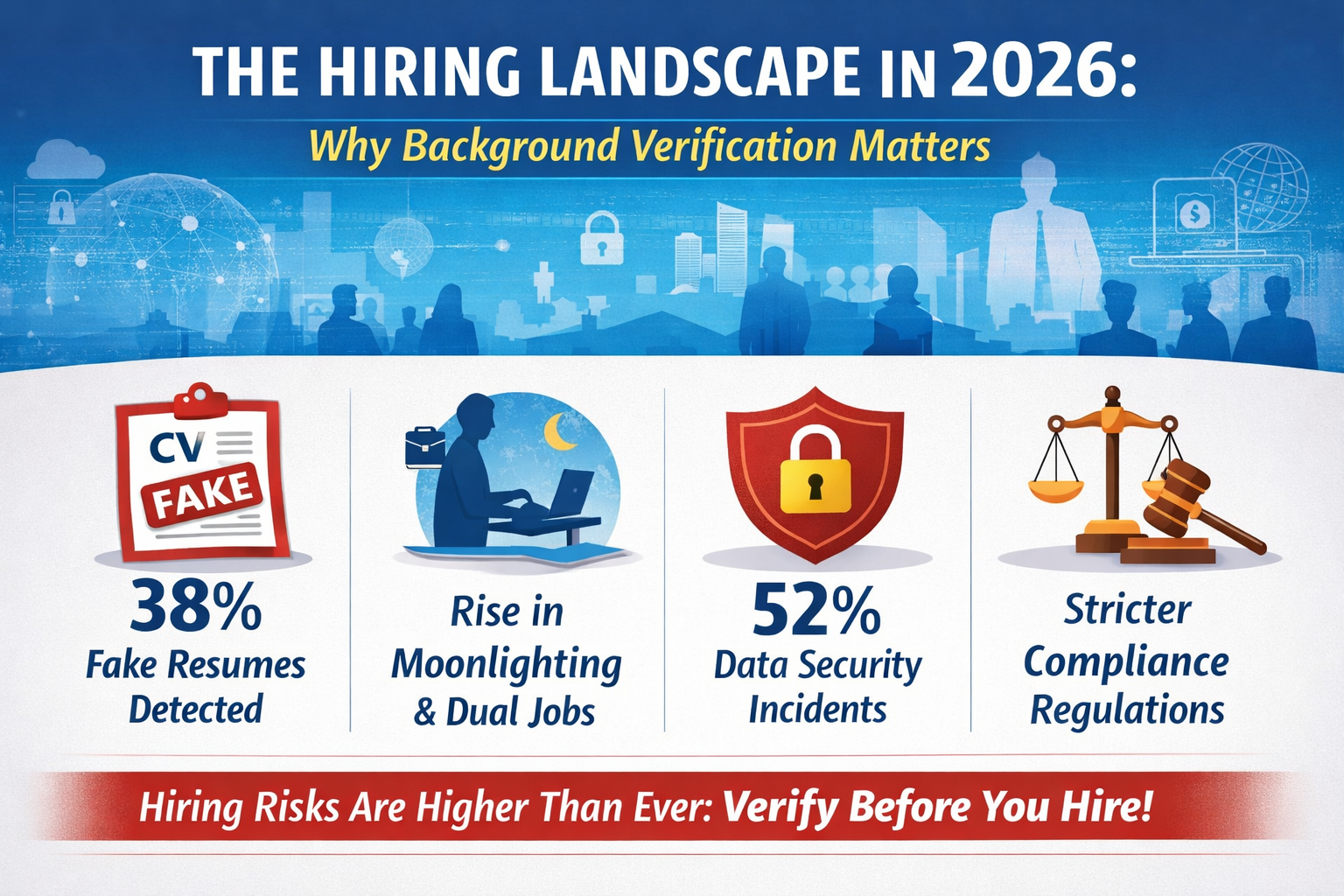
Industry reports suggest that over one-third of resumes contain some form of discrepancy. Without a structured employee background verification process, organizations are exposed to operational, legal, and reputational risks.
Why Resume Screening and Interviews Are Not Enough
Resumes and interviews are essential—but they are not verification tools.
A well-written resume can conceal:
- Employment gaps
- Terminations due to misconduct
- Inflated job titles
- Unverified freelance or contract work
Similarly, interviews evaluate communication and intent—not factual accuracy.
This is why pre employment background checks are critical. They replace assumptions with verified data, allowing HR teams and leadership to make confident hiring decisions based on facts, not trust alone.
The True Cost of a Bad Hire
Many companies underestimate the real cost of hiring errors. The impact extends far beyond replacement expenses.
- Financial Impact: A bad hire can cost 30–40% of the employee’s annual salary, factoring in recruitment, onboarding, training, lost productivity, and rehiring costs.
- Legal and Compliance Risks: Improper hiring can result in violations of labor laws, contractual obligations, and client compliance requirements—especially in regulated industries like IT, BFSI, healthcare, and logistics.
- Data and Security Threats: Employees with unchecked backgrounds pose serious risks to confidential data, intellectual property, and customer information.
- Brand and Reputation Damage: One incident involving employee misconduct can permanently damage employer branding, customer trust, and partner relationships.
Partnering with a professional employee screening company significantly reduces these risks.
What Does a Comprehensive Background Verification Process Include?
A modern background verification process is structured, role-based, and compliant with Indian regulations. It typically includes:
- Employment Verification: Confirms previous employment, tenure, designation, and exit reasons
- Education Verification: Validates degrees, certifications, and academic institutions
- Identity Verification: Authenticates government-issued identity documents
- Address Verification: Confirms current and permanent residential details
- Criminal Record Check: Identifies any legal history relevant to employment risk
- Reference Checks: Assesses professional conduct and work ethics
- Moonlighting Checks (where applicable): Detects undisclosed dual employment
Reliable background verification companies in India customize these checks based on job roles, industry risks, and client requirements.
Why Background Verification Is More Critical Than Ever in 2026
Several emerging trends make background checks indispensable:
- Increase in Resume Fraud: With intense job competition, fake experience and document manipulation have increased significantly.
- Remote and Hybrid Hiring: Virtual onboarding limits physical verification, increasing dependence on structured digital screening.
- Higher Compliance Expectations: Global clients and regulatory bodies increasingly demand proof of workforce due diligence.
- Employer Brand Accountability: Organizations known for ethical hiring attract better talent, clients, and partnerships.
Ignoring background verification in this environment exposes businesses to avoidable risks.
How Dcode Research Enables Smarter Hiring Decisions
At Dcode Research, background verification is treated as a strategic safeguard, not a formality.
Our employee background verification services are designed to deliver:
- High accuracy through verified data sources
- Faster turnaround times without compromising quality
- Compliance with Indian labor laws and data privacy standards
- Role-based and industry-specific verification frameworks
- Clear, actionable reports for HR and leadership teams
As a trusted employee verification company in Bangalore, Dcode Research supports organizations across IT, startups, manufacturing, logistics, and corporate sectors in building secure and compliant workforces.
Background Verification Is a Leadership Responsibility
Strong hiring practices reflect leadership maturity. Organizations that prioritize verification demonstrate:
- Commitment to ethical hiring
- Accountability to stakeholders and clients
- Long-term business thinking
In 2026, trust will be a competitive advantage—and trust begins with verified employees.
Conclusion
Hiring quickly may help organizations grow—but hiring right ensures sustainability.
In an era where misinformation is easy and consequences are costly, background verification is no longer optional. It is a critical business function that protects people, data, and reputation.
If your organization is still treating background checks as an afterthought, now is the time to reassess your hiring strategy.
Verify before you hire. Build a workforce you can trust.
Frequently Asked Questions (FAQs) – Background Verification in India
- What is background verification in the hiring process?
Background verification is the process of validating a candidate’s personal, educational, professional, and legal information before employment. It ensures that the details shared during hiring are accurate and helps employers reduce hiring risks, fraud, and compliance issues.
- What checks are included in a pre-employment background check?
A standard pre employment background check may include:
- Employment verification
- Education verification
- Identity and address verification
- Criminal record check
- Reference checks
- Moonlighting or dual employment checks (role-specific)
The scope varies based on job role, industry, and risk exposure.
- How long does employee background verification take in India?
Background verification timelines typically range from 3 to 10 working days, depending on the type of checks, data availability, and responsiveness of previous employers or institutions. Professional background verification companies ensure faster turnaround without compromising accuracy.
- Can background verification be done after onboarding?
Yes, background verification can be conducted post-joining; however, this increases organizational risk. Best practice is to complete critical checks before onboarding, especially for roles involving data access, financial responsibility, or client interaction.
- What happens if discrepancies are found during background verification?
If discrepancies are identified, employers usually:
- Seek clarification from the candidate
- Evaluate the severity and intent
- Decide whether to proceed, reassign, or withdraw the offer
Not all discrepancies are fraudulent, but undisclosed or intentional misrepresentation is a serious concern.
- How does background verification help prevent moonlighting?
Moonlighting checks help identify undisclosed dual employment by validating employment records and timelines. This is particularly important for IT and remote roles where conflicts of interest and productivity risks are higher.
- Why should companies outsource background verification services?
Outsourcing to a professional employee screening company ensures:
- Accuracy and standardized processes
- Faster turnaround times
- Legal and compliance adherence
- Reduced internal HR workload
- Actionable and well-documented reports
This allows HR teams to focus on strategic talent initiatives.