
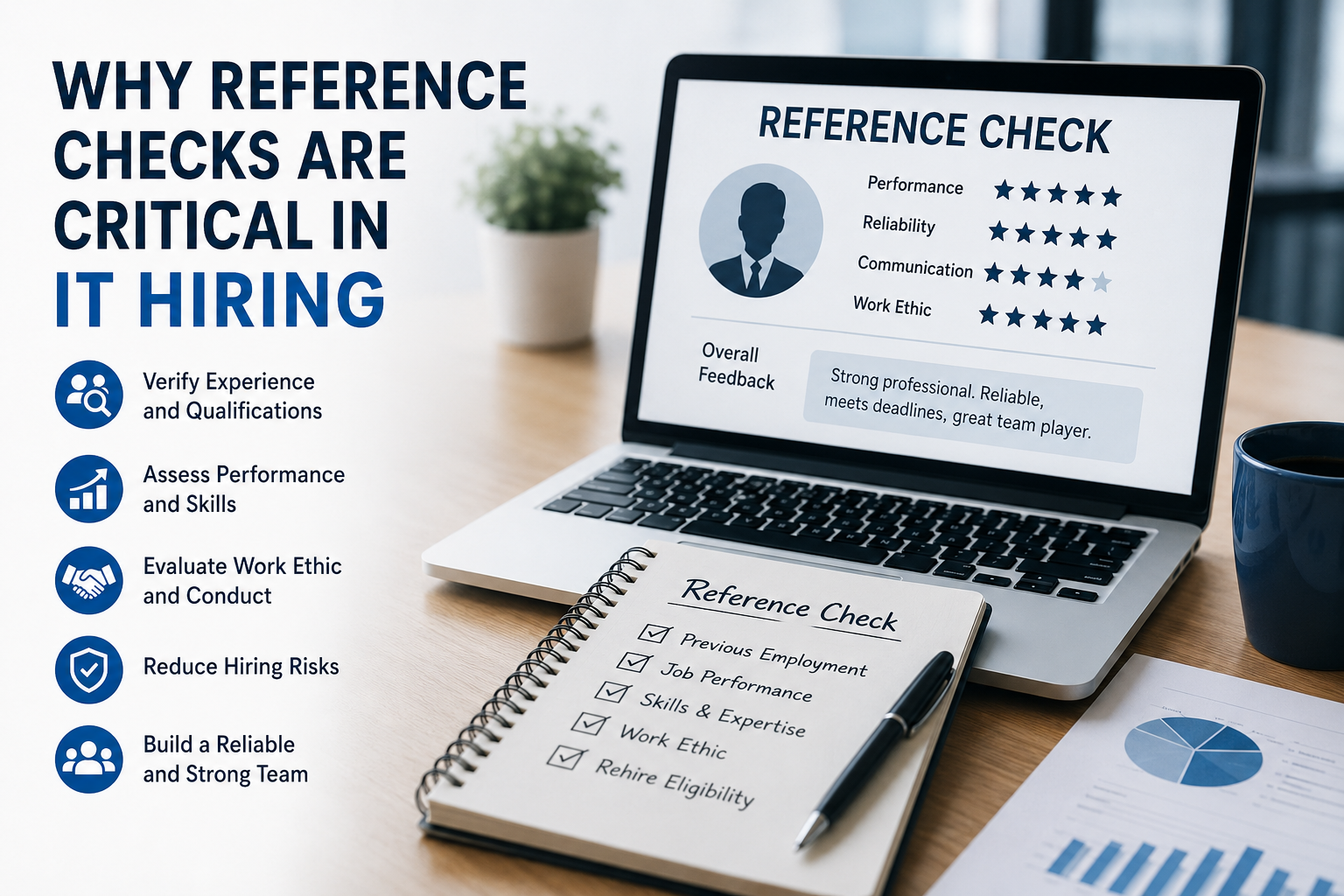
The IT industry is one of the fastest-growing sectors in the world. Organizations are constantly looking for skilled professionals who can contribute to innovation, security, and business growth. However, finding the right talent is not just about evaluating technical skills and qualifications. Employers must also verify a candidate’s professional background, work ethics, and credibility before making a hiring decision.
This is where employee reference checks play a crucial role. While resumes and interviews provide valuable insights into a candidate’s capabilities, they may not always reveal the complete picture. Reference checks help organizations validate information, reduce hiring risks, and ensure they are bringing trustworthy professionals into their workforce.
With increasing competition and the growing demand for skilled IT professionals, companies are investing heavily in IT hiring BGV processes and comprehensive verification procedures. Partnering with a reliable Background verification company Bangalore can help businesses conduct accurate and efficient checks, ensuring better hiring outcomes.
In this article, we will explore why reference checks are critical in IT hiring, the benefits they offer, and how they contribute to a strong and reliable workforce.
Understanding Employee Reference Checks
Employee reference checks are a vital part of the recruitment and background verification process. They involve contacting previous employers, supervisors, managers, or professional references provided by a candidate to verify information related to their employment history, skills, performance, and workplace behavior.
The purpose of employee reference checks is not just to confirm employment details but also to gain deeper insights into a candidate’s:
- Professional conduct
- Technical expertise
- Team collaboration skills
- Reliability and accountability
- Leadership qualities
- Communication abilities
- Work ethics
For IT companies, where employees often handle sensitive data, critical systems, and client information, these checks become even more important.
Why Reference Checks Matter in IT Hiring
- Verifying Resume Accuracy
Resume fraud remains a significant challenge across industries, especially in the technology sector. Candidates may sometimes exaggerate their skills, job responsibilities, achievements, or employment duration to gain a competitive advantage.
Through employee reference checks, hiring managers can verify:
- Previous job titles
- Employment dates
- Roles and responsibilities
- Reporting structures
- Project involvement
- Professional achievements
This verification helps employers identify discrepancies and make informed hiring decisions.
- Assessing Technical Competence Beyond Interviews
Technical interviews and assessments can evaluate a candidate’s current knowledge, but they may not fully reveal how effectively that individual applies those skills in a real-world environment.
Reference checks provide valuable feedback from former supervisors regarding:
- Problem-solving abilities
- Coding practices
- Project management skills
- Adaptability to new technologies
- Performance under pressure
Such insights help employers determine whether a candidate can successfully contribute to ongoing projects and organizational goals.
- Evaluating Workplace Behavior
In IT environments, technical expertise alone is not enough. Successful professionals must also demonstrate strong interpersonal and communication skills.
Employee reference checks help assess:
- Teamwork capabilities
- Professional conduct
- Collaboration with colleagues
- Conflict resolution skills
- Responsiveness to feedback
- Ability to meet deadlines
Understanding these behavioral traits can significantly improve hiring quality and reduce workplace conflicts.
- Reducing Hiring Risks
A poor hiring decision can be expensive. Costs associated with recruitment, onboarding, training, and productivity loss can quickly add up when an unsuitable candidate is hired.
Reference checks act as a risk mitigation tool by helping employers identify potential concerns before extending an offer.
These concerns may include:
- Performance issues
- Frequent job hopping
- Disciplinary actions
- Attendance problems
- Professional misconduct
A thorough IT hiring BGV process can help organizations avoid costly hiring mistakes.
The Growing Importance of IT Hiring BGV
As digital transformation accelerates, organizations are becoming increasingly dependent on technology professionals. IT employees often have access to:
- Sensitive customer information
- Intellectual property
- Financial systems
- Proprietary software
- Confidential business data
This makes comprehensive IT hiring BGV procedures essential for maintaining security and trust.
Modern IT hiring background verification typically includes:
- Employment verification
- Educational verification
- Employee reference checks
- Identity verification
- Criminal record checks
- Address verification
- Professional certification verification
By combining these verification measures, employers can build a stronger and more secure workforce.
Protecting Data Security and Client Trust
Data security is a top priority for every IT company. Cybersecurity threats, data breaches, and insider risks continue to challenge businesses worldwide.
Hiring individuals without proper verification can expose organizations to serious risks.
Reference checks help employers understand:
- Whether a candidate followed security protocols
- Their reliability in handling confidential information
- Professional integrity
- Compliance with company policies
When hiring professionals who manage critical systems or client data, thorough verification becomes an essential safeguard.
Identifying Cultural Fit
Technical qualifications can get a candidate through the interview process, but cultural alignment often determines long-term success.
A candidate who fits well within the organizational culture is more likely to:
- Stay longer with the company
- Collaborate effectively
- Maintain productivity
- Contribute positively to team dynamics
Employee reference checks provide valuable insights into how candidates interact with teams, managers, and workplace environments.
Questions often explored during reference checks include:
- How did the candidate work within teams?
- Were they dependable and accountable?
- How did they respond to challenges?
- Would the previous employer rehire them?
The answers help employers evaluate cultural compatibility before making hiring decisions.
Preventing Employee Turnover
Employee turnover is a significant concern for IT companies. Replacing a skilled professional often requires substantial investment in recruitment, training, and onboarding.
One of the major causes of turnover is poor hiring decisions.
By conducting effective employee reference checks, organizations can:
- Better understand candidate suitability
- Confirm career stability
- Verify performance consistency
- Assess long-term commitment potential
This leads to improved employee retention and lower recruitment costs.
Supporting Better Hiring Decisions
Hiring managers often face pressure to fill positions quickly, especially when projects have strict deadlines. However, rushing through the hiring process can result in poor decisions.
Reference checks provide an additional layer of confidence by validating information obtained during:
- Resume screening
- Technical assessments
- HR interviews
- Managerial interviews
This comprehensive approach enables hiring teams to make data-driven decisions rather than relying solely on candidate claims.
The Role of Background Verification Services in IT Recruitment
Professional Background verification services have become an essential component of modern recruitment strategies.
Organizations increasingly rely on specialized verification providers to ensure accuracy, speed, and compliance.
Background verification services typically offer:
Employment Verification: Confirms previous employment history, job roles, and tenure.
Education Verification: Validates academic qualifications and certifications.
Employee Reference Checks: Collects professional feedback from previous employers and supervisors.
Identity Verification: Ensures authenticity of government-issued documents.
Criminal Record Verification: Identifies potential legal concerns.
Address Verification: Confirms residential information provided by candidates.
These services help organizations streamline recruitment while minimizing hiring risks.
Why IT Companies Prefer Professional Verification Partners
Conducting reference checks internally can be time-consuming and resource-intensive. HR teams often struggle to verify multiple candidates while managing ongoing recruitment activities.
Partnering with a professional Background verification company Bangalore offers several advantages:
Faster Verification Process: Experienced verification providers have established processes and networks that enable quick turnaround times.
Greater Accuracy: Specialized teams ensure thorough verification and minimize errors.
Compliance and Data Security: Professional providers follow legal and regulatory guidelines for handling candidate information.
Reduced Administrative Burden: HR teams can focus on recruitment and talent acquisition while verification experts manage the screening process.
Improved Hiring Confidence: Verified information helps employers make informed hiring decisions with greater confidence.
Best Practices for Conducting Employee Reference Checks: To maximize the effectiveness of employee reference checks, organizations should follow structured processes.
Obtain Candidate Consent: Always seek candidate permission before contacting references.
Use Consistent Questions: Develop standardized questions to ensure fair and objective evaluations.
Speak with Direct Supervisors: Managers who worked closely with the candidate can provide the most relevant insights.
Focus on Job-Relevant Information: Ask questions related to performance, skills, conduct, and reliability.
Document Findings: Maintain detailed records for compliance and future reference.
Combine with Comprehensive BGV: Reference checks should be part of a broader IT hiring BGV strategy rather than a standalone process.
The Future of IT Hiring and Background Verification
As remote work, global hiring, and digital transformation continue to reshape the workforce, the need for reliable background verification will only increase.
Organizations are now dealing with:
- Distributed teams
- Cross-border recruitment
- Remote onboarding
- Increased cybersecurity concerns
These trends make employee reference checks more valuable than ever.
Modern verification technologies are also helping employers conduct faster and more accurate screenings while maintaining compliance and candidate privacy.
Companies that prioritize comprehensive IT hiring BGV practices will be better positioned to build secure, productive, and trustworthy teams.
Conclusion
In today’s competitive technology landscape, hiring the right talent goes far beyond reviewing resumes and conducting interviews. Employee reference checks provide critical insights into a candidate’s professional performance, reliability, technical capabilities, and workplace behavior.
When integrated into a comprehensive IT hiring BGV process, reference checks help organizations reduce hiring risks, improve employee retention, strengthen security, and make informed recruitment decisions.
As businesses continue to rely on technology-driven operations, partnering with an experienced Background verification company Bangalore for reliable Background verification services can significantly enhance hiring quality and protect organizational interests.
Ultimately, thorough employee reference checks are not just a recruitment formality—they are a strategic investment in building a dependable, high-performing, and trustworthy IT workforce.
Real-World Scenario-Based FAQs on Employee Reference Checks:
- A candidate claims to have managed a team of 15 developers. How can reference checks help verify this?
Scenario: A software company shortlisted a candidate for a Project Manager role based on their claim of leading a 15-member development team. During employee reference checks, the previous employer confirmed that the candidate worked as a Senior Developer but did not manage any direct reports.
Answer: Reference checks help validate leadership experience, reporting responsibilities, and actual job roles. This enables employers to assess whether the candidate’s experience aligns with the requirements of the position.
- How can reference checks help identify potential performance issues?
Scenario: An IT services company hired a software engineer after a strong technical interview. A later review of previous employment records revealed that the employee had consistently missed project deadlines at their former organization, information that could have been identified through reference checks before hiring.
Answer: Employee reference checks provide insights into a candidate’s past performance, reliability, and ability to meet project expectations, helping organizations make informed hiring decisions.
- Can reference checks help detect resume fraud?
Scenario: A candidate applied for a cloud architect position and listed experience with large-scale cloud migration projects. During the reference check process, former supervisors confirmed the candidate had worked on the project but in a supporting role rather than leading the implementation as claimed.
Answer: Reference checks help verify project involvement, responsibilities, and achievements, reducing the risk of hiring based on inaccurate or exaggerated information.
- How do reference checks support hiring for data-sensitive IT roles?
Scenario: A financial technology company was recruiting a database administrator with access to customer financial records. During reference checks, a former employer reported repeated violations of internal data handling procedures and security policies.
Answer: Reference checks can uncover past workplace behaviors related to compliance, confidentiality, and security practices, which are especially important for roles involving sensitive information.
- How can reference checks reduce employee turnover?
Scenario: A technology startup hired a senior developer without conducting employee reference checks due to an urgent project requirement. Within six months, the employee left the organization. During the exit discussion, it became apparent that similar short tenures had occurred at multiple previous companies.
Answer: Reference checks can reveal patterns related to job stability, workplace behavior, and long-term commitment, helping organizations identify candidates who are more likely to remain with the company.